


Let me say something most marketing accounts will not say because it makes their follower count look bad.
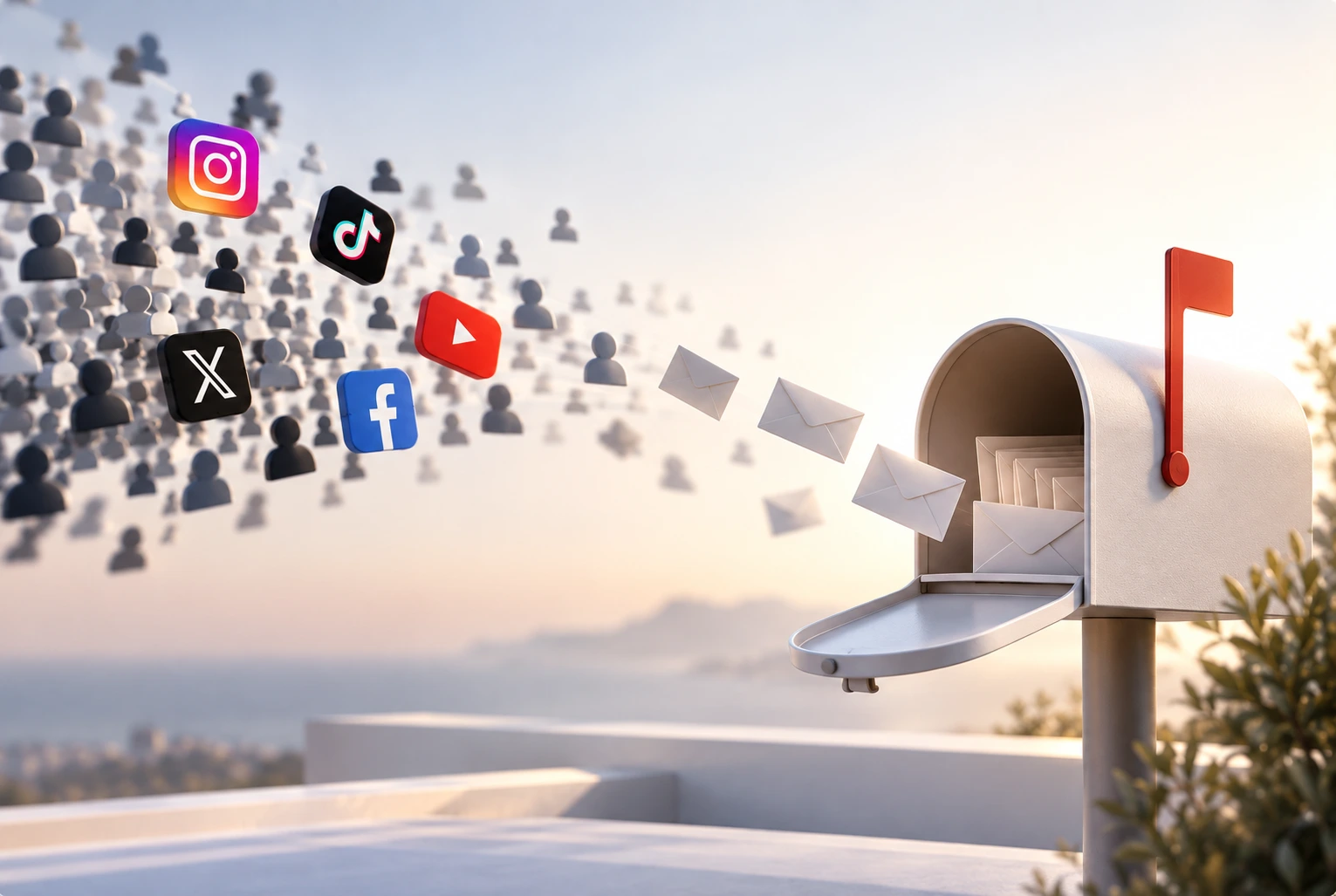
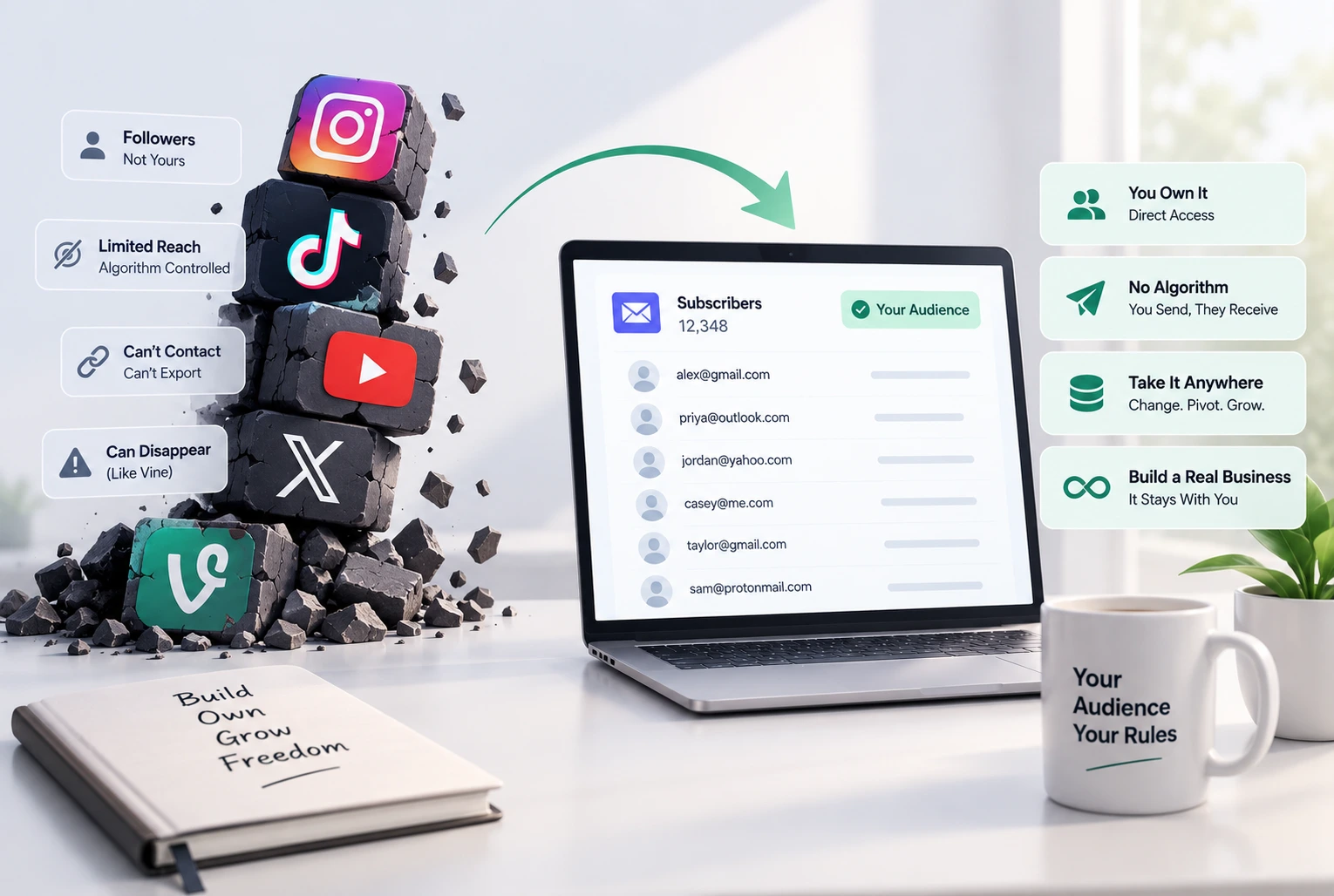
That number on your Instagram profile? It is not yours. You did not earn an asset. You earned temporary permission to show up in someone else’s feed, and that permission can be revoked, throttled, or made increasingly expensive at any point without warning.
Nobody woke up on the day Instagram quietly reduced reach for accounts that were not paying for ads and thought: this is a surprise. It was not a surprise. It was always going to happen because that is how the business model works. Attention is the product. Reach is what they sell. Once they can charge for it, they will. And they did.
Here is what nobody tells you when you are grinding for followers. A creator with 50,000 followers and no email list is genuinely less financially secure than a creator with 3,000 email subscribers. The followers are borrowed. The subscribers are owned. One bad quarter on the algorithm, one platform policy change, one account restriction for a post that never violated any real rule, and the person with 50,000 followers is starting over. The person with 3,000 email subscribers sends a newsletter on Tuesday and has a real conversation with people who chose to hear from them.
This is not a theoretical risk. It is the documented experience of thousands of creators who built everything on rented ground and eventually found out what rented means.
You Are Building on Someone Else’s Land
Here is the cleanest way to understand what social media followers actually are.
When you post on Instagram, you are a business operating inside someone else’s shopping centre. The foot traffic belongs to them. The access routes belong to them. The terms of your tenancy belong to them. When they decide to restructure the layout, raise the rates, or let a different type of business take your spot near the entrance, that is within their rights and completely outside yours.
Your followers did not give their attention to you. They gave it to the platform. The platform is gracious enough to point some of that attention in your direction when it suits their algorithm. The key word is when it suits. Not when it suits you.
Facebook is the most documented example of this. Organic reach for brand pages dropped from around 16% of followers in 2012 to under 5% by 2014 because the platform decided paid distribution would be more profitable than free distribution. Nobody asked the brands who had spent years building their pages. The platform changed the rules because they could.
Instagram did the same. LinkedIn did it. TikTok is doing a version of it right now by favouring content that keeps people on TikTok over content that sends them elsewhere. Every platform will eventually do it because every platform needs to monetise their inventory of attention, and your organic reach is the thing they monetise.
Understanding this is not pessimism. It is clarity about what you are actually building when you chase follower counts as a primary goal.
The Vanity Metric Nobody Wants to Talk About
Follower counts became the currency of social media marketing early on and never really stopped being treated as the main metric even after they stopped being the most meaningful one.
A business with 200,000 followers and 4% reach is actively reaching 8,000 people per post. A business with 8,000 email subscribers is reaching 8,000 people per send. The math is identical. The difference is that the email sender reaches those 8,000 people directly, in an inbox they checked by choice, without competing with 200 other posts in a scroll. The social media poster reaches theirs after competing with everything else the algorithm is testing that day.
And the email list does not shrink every time the algorithm updates. It does not reduce your access to your own audience to make room for someone who paid more. It is just yours. Full stop.
What Ownership Actually Means
When someone gives you their email address, something genuinely different has happened compared to when they click follow.
Following is passive. It takes one tap and costs the follower nothing. They may forget they did it. They may never see your content again because the algorithm never shows it to them. They are on a list that you cannot contact, cannot export, and cannot use outside of that platform’s own messaging tools.
Subscribing is a decision. The person decided the thing you were offering was worth giving you direct access to their inbox. They made a deliberate choice to invite you into a space they treat as more personal than a social feed. That context changes everything about the relationship.
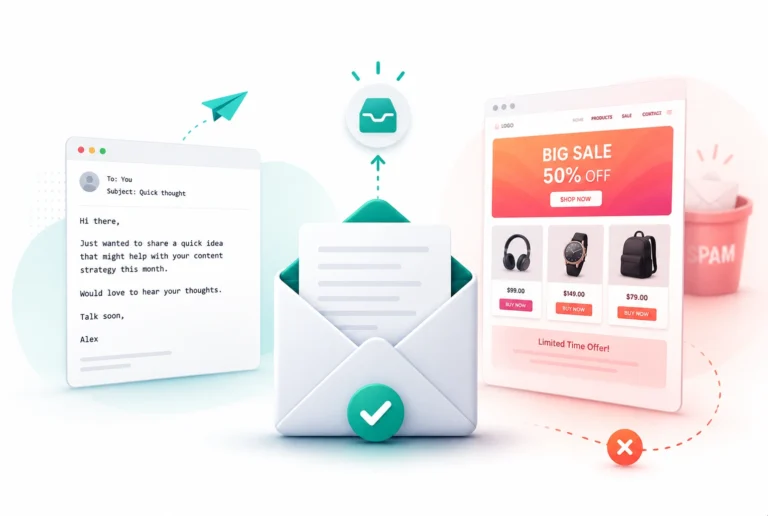
When you send an email to your list, you own the delivery. There is no algorithm deciding whether today is a good day for your message to reach them. You write it, you send it, it arrives. That directness is the whole point.
What Happens When the Platform Goes Away
Ask any creator who built their entire following on Vine what they own today.
The platform shut down in 2016. Every follower, every view, every piece of content gone. The creators who had built email lists during their Vine years continued their businesses. The ones who had only followers disappeared with the platform.
TikTok’s legal status in the US created the same anxiety for two years. The creators who talked openly about that period described the same realisation: they had no way to reach their audience if the app disappeared tomorrow. No contact information. No alternative channel. Nothing.
This is not about predicting which platform will fail. Most will not fail. But every single one of them will change in ways that reduce your organic access to your followers because every single one of them is a business with financial incentives to do exactly that.
An email list goes with you. Change your brand name. Move platforms. Shift your business model. The list comes with you because the list is data you collected, stored, and own.
The Conversion Gap Nobody Brings Up
There is a conversation most social media strategists avoid because it makes organic social look bad.
The average email open rate for a content or newsletter business sits somewhere between 30 and 45 percent for a well-maintained list. The average organic reach for a social media post on most platforms is between 2 and 8 percent of followers. That gap is not small. It is the difference between talking to nearly half your audience and talking to a fraction of it.
But reach is only one part of the gap. The other part is intent.
Someone who opened your email was in their inbox, in a focused mode, when they encountered your message. Someone who saw your Instagram post was mid-scroll, between videos of their friend’s holiday and a sponsored ad for a mattress. The context in which your content lands determines how seriously people engage with it.
Email readers buy things at rates that consistently exceed social media click-through rates across almost every category of content. Not because email is a magic conversion tool but because the audience is warmer, the attention is higher, and the relationship is one that the subscriber chose to have.
The Creator Who Proved This Without Meaning To
One of the clearest illustrations of this gap is a pattern that keeps repeating among creators who grow fast on social and then try to convert that growth into revenue.
They launch something to their 40,000 followers. A course. A digital product. An affiliate offer. And the sales numbers are far lower than the follower count would suggest because follower count and buying intent are almost completely unrelated metrics. Meanwhile, creators with modest followings but active email lists consistently report that their newsletters convert at rates that make the math work, even at small list sizes.
The reason is straightforward. The person on your email list raised their hand. They said yes to you specifically. The follower said yes to a button that the algorithm placed in front of them on a day when they were already scrolling through the app.
How to Use Social Media the Right Way
None of this means abandon your Instagram account or stop posting on LinkedIn. Social media is genuinely useful. It is just useful for a different job than most creators assign it.
The right job for social media is discoverability and first impression. It is where people find you for the first time, decide whether you are worth paying attention to, and hopefully follow you. That is a real and valuable function. The mistake is treating that as the destination rather than the beginning.
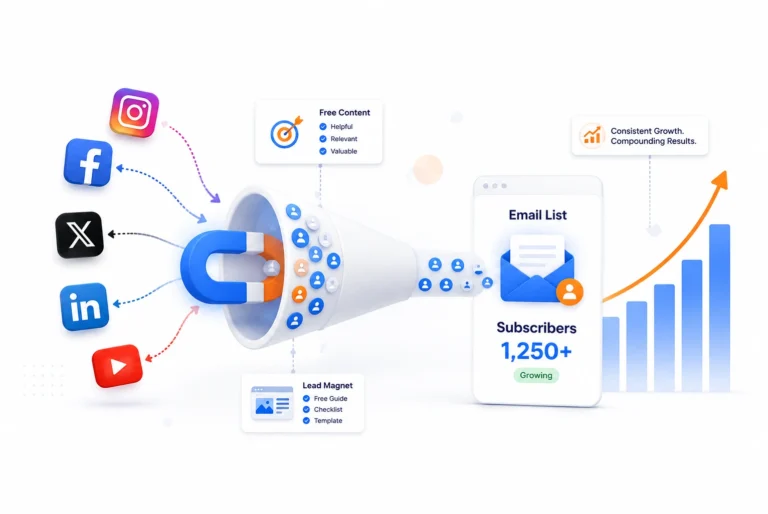
The destination is your email list. Every piece of social content should have a pathway to it. Not a hard sell. A natural next step for people who liked what they just saw and want more.
The Bio Link Is Doing Too Little for Most Creators
Most social profiles have one link in the bio pointing to a homepage or a Linktree with five options. Neither converts well because neither is specific.
The highest-converting bio link is one that goes directly to a page offering one specific thing in exchange for an email address. Not “subscribe to my newsletter” as a generic ask. A specific free resource that solves a specific problem for the specific person who just consumed your content and thought it was worth their attention.
The moment someone arrives from your Instagram to a page that says “here is the exact checklist I use to get my content cited by ChatGPT,” they are in a completely different mindset than someone who arrived at a generic homepage. They came with a specific appetite and you fed it immediately. That is when email opt-in rates actually mean something.
The Content Upgrade That Changes Everything
A content upgrade is a lead magnet tied specifically to one piece of content rather than your site in general.
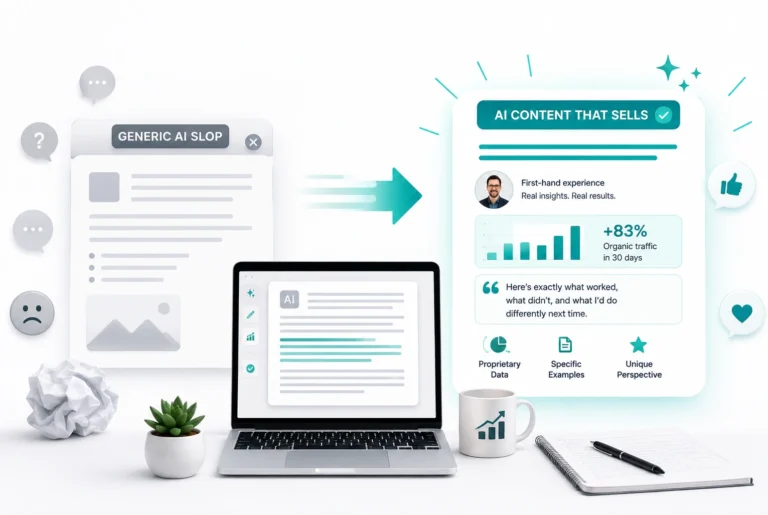
If you post a carousel on LinkedIn about making AI content sound human, the content upgrade for that post is a one-page checklist of the five edits that remove the AI sound from any draft. Not a broad guide to AI content marketing. That specific thing for that specific person who just engaged with that specific post.
The specificity is the point. A generic lead magnet gets a generic response. A matched, specific resource for someone who just consumed relevant content converts at rates that make the email list grow quickly even with modest social following.
Starting the List Before You Think You Are Ready
The most common email list mistake is waiting.
Waiting until the content is more established. Waiting until the following is bigger. Waiting until there is something good enough to offer. The list of reasons to wait is long and none of them are as costly as the list you would have built if you had started earlier.
Every person who reads your content and does not have a way to hear from you again is a person you met once at a party and never got the number for. They may remember you well. They may come back. But the odds go down significantly the moment they close the tab.
The list does not need to be big to be useful. It needs to exist. A list of 200 people who chose to hear from you is worth more than 20,000 followers who may or may not ever see your posts again, because those 200 people made a deliberate choice and that choice means something about their level of interest.
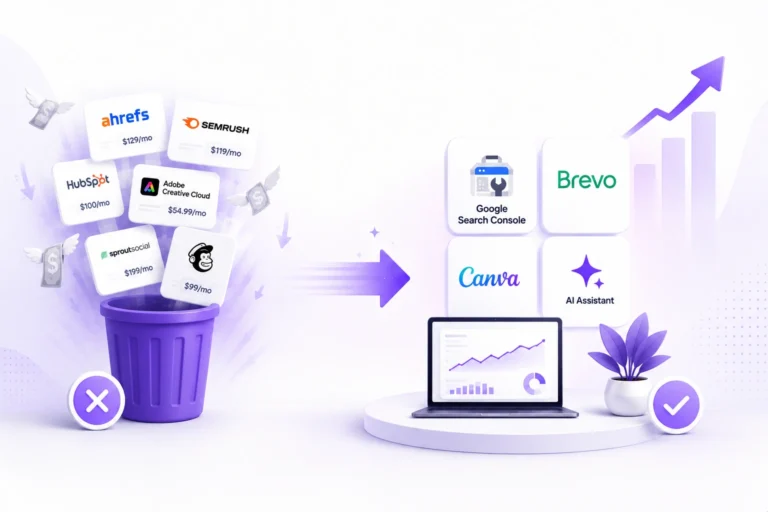
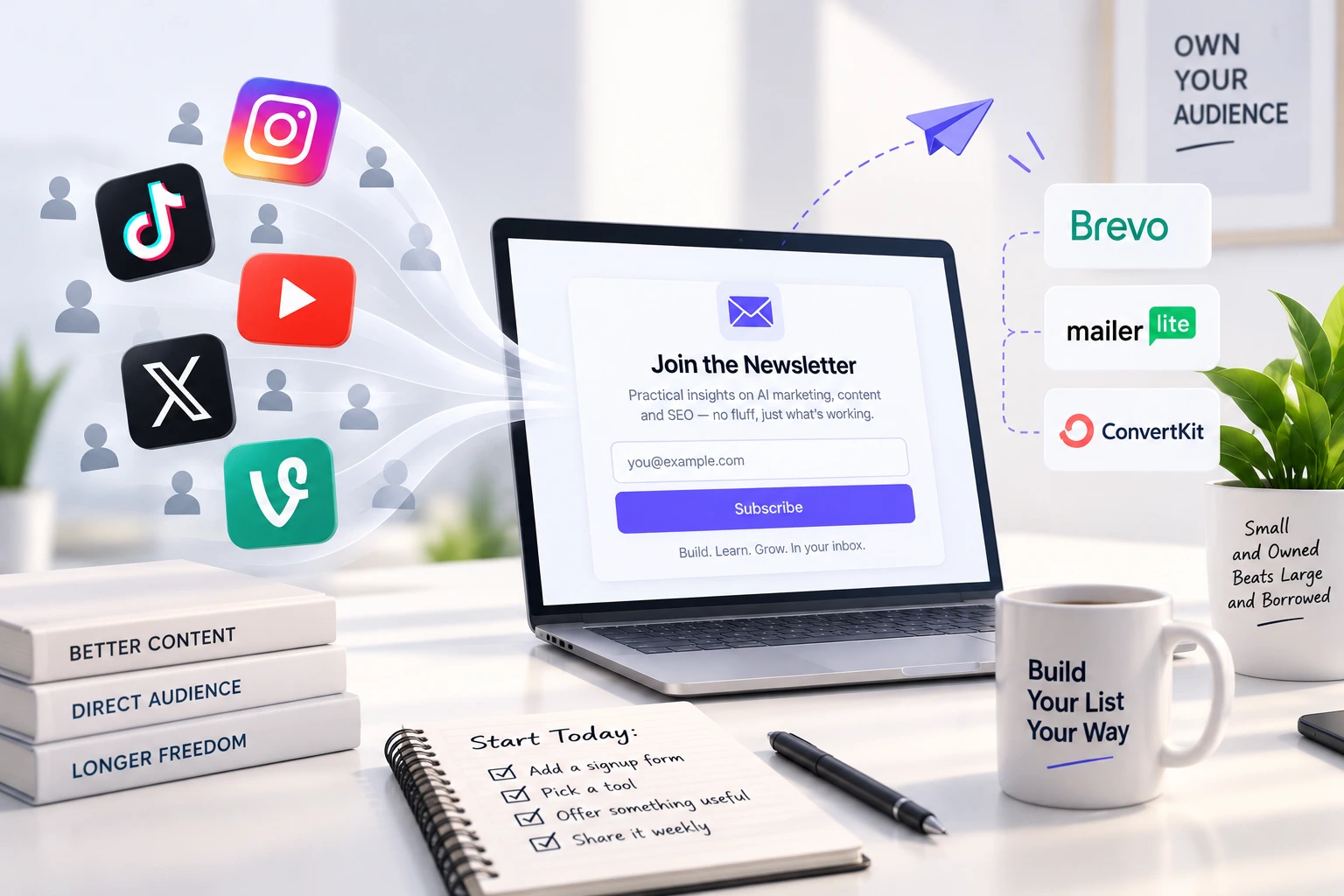
Start with whatever you have. Add one opt-in to your most-visited page this week. Pick a free tool like Brevo or MailerLite and set up the simplest possible form. Offer one genuinely useful thing in exchange for an email address. Then tell people about it once per week on whatever social platform you already use.
The list will be small at first. That is fine. Small and owned beats large and borrowed every single time when something goes wrong on the platform you do not control.
If you want no-fluff, no-hype insights like this every week, The Marketing Shelf newsletter covers what is actually working in AI marketing, content, and SEO in 2026. Subscribe below and I’ll see you in your inbox.
CONCLUSION:
Social media is not the enemy. Treating it as the entire strategy is the problem.
Followers are awareness. Email subscribers are relationships. Awareness has value. Relationships have value and permanence and the ability to survive whatever happens on whatever platform next quarter.
The number on your profile does not belong to you. The number in your email platform does. That difference is the whole argument.
Build both. Use social to find people. Use your list to keep them. And never make the mistake of thinking that the number you cannot export is the one worth protecting.
FAQs
Q: Why do social media followers not matter without an email list?
A: Social media followers live on someone else’s platform. The platform controls how many of them see your content, and that number can drop without warning whenever the algorithm changes. An email list is data you own and control. Send an email and it arrives in every subscriber’s inbox regardless of any platform decision. One is borrowed access. The other is actual ownership.
Q: Is an email list really better than social media followers?
A: For converting an audience into revenue, yes. Email consistently outperforms social media because the person who gave you their email address made a deliberate choice to hear from you. A social media follower may never see your content again after following. Email also delivers your message directly without competing with an algorithm that may or may not decide today is a good day to show your content.
Q: How many email subscribers do you need before it matters?
A: It matters from the first subscriber. A list of 200 people who chose to hear from you is more commercially valuable than a following of thousands who passively hit follow during a scroll. The value is in the quality of consent, not the size of the number. Start building it now, regardless of how small it will be at the beginning.
Q: Can I use social media to grow my email list?
A: Yes. Social media is most valuable as a discovery and first impression channel. Use it to find new people and give them a reason to want more. Then send them to a specific landing page with one relevant free resource in exchange for their email. That combination, social for discovery and email for ownership, is what sustainable audience building actually looks like.