


Voice search hit 27% of all global queries in 2026, according to Digital Applied’s March 2026 analysis of global search volume data. That figure was a projection two years ago. Today it reflects daily behaviour across smartphones, smart speakers, in-car systems, and AI-native wearables.
8.4 billion voice assistants are now active worldwide, outnumbering the global human population for the first time, according to ZELITHO’s December 2025 analysis of the global voice assistant market. The installed base includes every smartphone running Google Assistant or Siri, every Amazon Echo and Google Nest device, every vehicle infotainment system, and every AI-native assistant embedded in consumer hardware. Voice is not an alternative search channel anymore. It is the primary interface for a growing segment of every query type your target audience is already making.
The implication for your content strategy is specific: a strategy built entirely around typed queries is now optimising for 73% of the market while leaving the remaining 27% to competitors who have adapted their content structure for spoken retrieval. And 60% of users under the age of 35 now conduct searches primarily via voice, according to Soap Media’s May 2026 analysis, which means the trend is not slowing down.
There is one critical fact that most voice search guides in 2026 still get wrong. Google confirmed it does not maintain a separate voice index. Spoken queries use the same semantic understanding models that interpret typed and visual searches, according to AWeb Digital’s January 2026 analysis of Google’s conversational search architecture. Traditional voice SEO tactics like targeting question-style keywords or writing artificially conversational content no longer apply as standalone strategies. The optimisation target in 2026 is being answer-ready for the AI systems that process all query types, spoken and typed, through the same pipeline.
This guide covers exactly how voice and conversational search works in 2026, how each major platform selects its spoken answers, the specific content and technical changes that improve voice citation probability, and the schema types that signal speakability to AI assistants.
How Voice and Conversational Search Actually Works in 2026
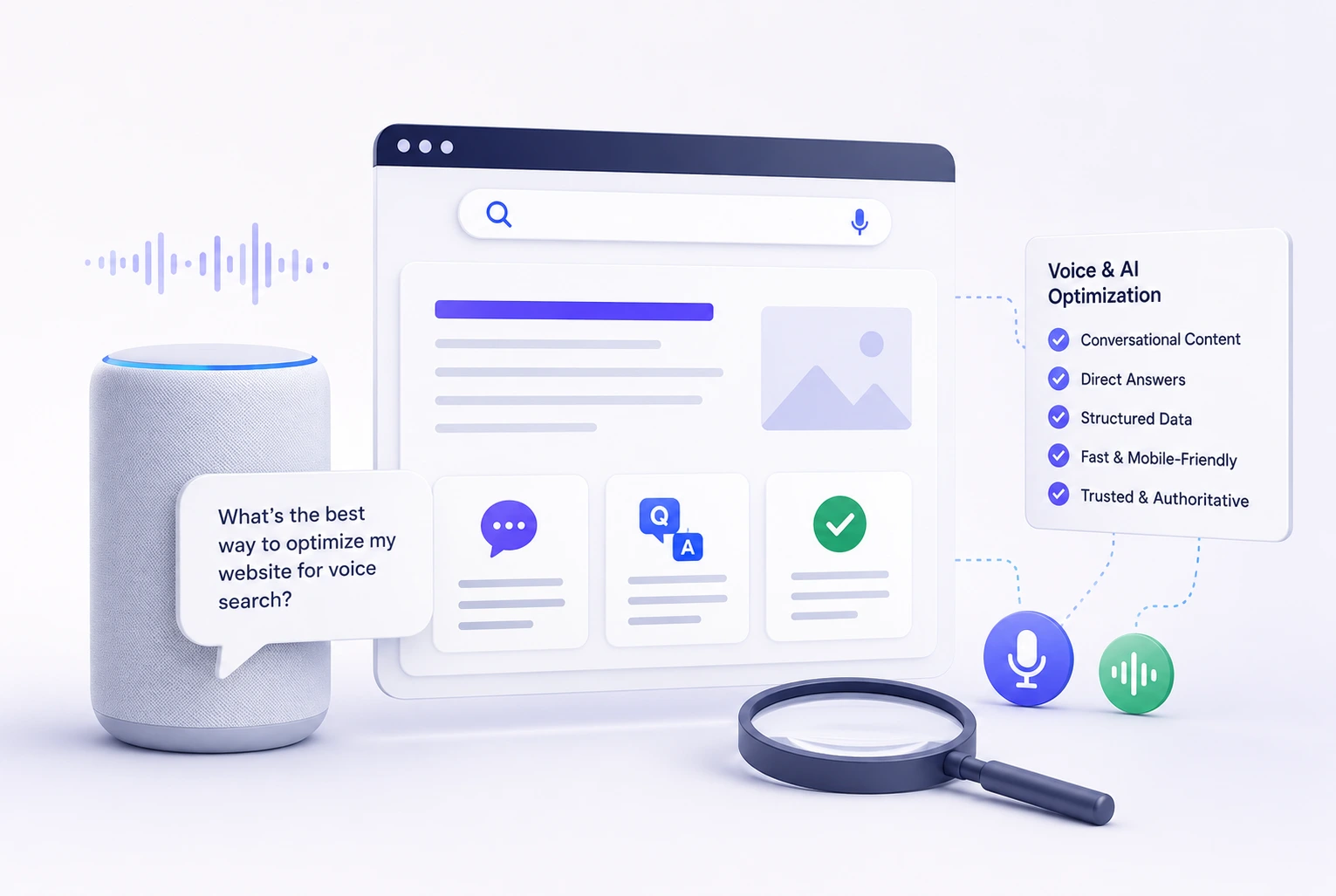
Voice search and conversational search in 2026 feed the same AI systems that process typed queries, with the primary difference being query length, intent specificity, and answer format requirements. Understanding the pipeline tells you exactly what to optimize for.
The Four-Stage Retrieval Pipeline
Every voice query processed by Google Assistant, Siri, Alexa, or any AI-native assistant follows a four-stage pipeline: query intent parsing, index retrieval, passage extraction, and spoken delivery.
Query intent parsing converts spoken natural language into a structured intent signal. Voice queries average 7 to 10 words in length, compared to 2 to 3 words for typed queries, according to Digital Applied’s 2026 analysis. The longer phrasing provides significantly more intent context, which means the AI system can match the query to a much more specific answer than a short typed query allows. A typed query of “email marketing ROI” matches to dozens of possible intents. A voice query of “what is the average ROI for email marketing campaigns in 2026” matches to a single, specific answer need.
Index retrieval selects candidate pages from the search index using the same ranking signals as traditional search, with stronger weighting on E-E-A-T authority, page speed, and mobile performance. The pages retrieved are the same pool that traditional organic results draw from. There is no separate voice index. The difference is in how the next stage selects from the retrieved candidates.
Passage extraction identifies the specific section of each retrieved page that most directly answers the voiced question. This is where content structure determines whether your page becomes the spoken answer or gets passed over. The passage must be self-contained, answer the question without requiring surrounding context, and read naturally when spoken aloud. A passage that requires the listener to remember what was said two sentences ago fails the spoken delivery requirement and gets replaced by a shorter, more self-contained alternative from a competitor.
Spoken delivery converts the selected passage to text-to-speech output. The optimal answer length for voice delivery is 40 to 90 words, according to Fuel Online’s April 2026 analysis of voice assistant response patterns. Shorter than 40 words feels incomplete. Longer than 90 words loses the listener before the key point lands.
Position Zero Is the Only Position That Matters for Voice
In voice search, there is only one result. The AI assistant reads one answer. If your content is not that answer, it does not exist in the voice experience regardless of whether it ranks in positions 2 through 10 in typed search results.
This single-answer dynamic makes voice search the most winner-take-all search channel in 2026. Google AI Overviews accompany featured snippets in 63.67% of cases, according to ZELITHO’s 2026 analysis. A featured snippet or Position Zero placement is both the traditional visual result and the spoken answer source for voice queries on the same page. Optimising for featured snippets and optimising for voice answers are therefore the same optimisation effort applied to the same ranking position.
Platform-Specific Signals: How Each Voice Assistant Selects Answers
The four major voice platforms use overlapping but distinct signals when selecting spoken answers. Understanding these differences allows you to prioritise your optimisation effort based on which platform your audience uses most.
Google Assistant and Google AI Overviews
Google Assistant in 2026 is fully integrated with Google AI Overviews and draws its voice answers from the same retrieval pipeline that powers AI Overviews in typed search. The six core voice ranking signals for Google Assistant are conversational query match, answer brevity of 60 to 90 words maximum, E-E-A-T authority, schema markup including FAQPage and Speakable schema, page speed, and local signals for location-intent queries, according to Fuel Online’s April 2026 analysis.
Speakable schema is the most specific technical signal Google uses to identify content intended for voice delivery. It marks specific sections of a page as optimised for text-to-speech and tells Google Assistant exactly where to look for a spoken answer on any given page. Pages that implement Speakable schema in combination with FAQPage schema see measurably higher voice citation rates because they are providing explicit extraction instructions for both question-answer formats and general article sections.
Apple Siri and Apple Intelligence
Siri in 2026 operates through Apple Intelligence, which draws on a combination of on-device processing and server-side retrieval using Apple’s own index and, for web queries, Bing’s index through a partnership with Microsoft. Siri favours entity-marked content with clear schema declarations, Apple Maps presence for local queries, and natural spoken-English phrasing throughout the content, according to Fuel Online’s April 2026 analysis of Apple Intelligence voice retrieval behaviour.
For non-local voice queries, optimising for Bing through Bing Webmaster Tools verification and IndexNow submission significantly improves Siri visibility because Siri’s web retrieval relies on Bing’s index for queries that go beyond Apple’s first-party data sources.
Amazon Alexa+
Alexa+ uses Bing’s index for general web queries, making Bing Webmaster Tools verification and IndexNow compliance mandatory for Alexa voice visibility, according to Fuel Online’s April 2026 analysis. Alexa+ specifically favours content with direct answer structures, verified business information in structured data, and clear declarative sentences that read naturally when converted to text-to-speech without the listener needing visual context.
For content sites, Alexa+ visibility follows the same optimisation path as Siri: Bing Webmaster Tools verification, IndexNow submission for fast indexing, and content structured with direct answers of 40 to 90 words per section.
AI-Native Assistants: ChatGPT Voice, Perplexity Voice, and Gemini Live
The emerging category of AI-native voice assistants, including ChatGPT’s voice mode, Perplexity’s voice interface, and Gemini Live, use their own retrieval and synthesis pipelines rather than traditional search indexes. These platforms favour the same structural signals as their text-based equivalents: direct answers, attributed statistics, entity completeness, and FAQ schema for extractable Q&A content.
Google Search Live voice and video conversational search is now available in over 200 countries as of 2026, according to Digital Applied’s voice search statistics report. The multimodal nature of these new assistants, combining voice input with visual processing, means that content optimised for text extraction is simultaneously optimised for voice delivery from the same assistant.
Voice Platform Comparison Table
The table below maps each major voice platform to its index source, its answer length preference, its top-ranking signals, and the primary schema types that improve voice citation probability.
| Voice Platform | Index Source | Optimal Answer Length | Top Ranking Signal | Key Schema Type |
| Google Assistant | Google index | 40 to 90 words | Featured snippet + Speakable schema | Speakable + FAQPage |
| Apple Siri | Bing + Apple index | 40 to 60 words | Entity markup + Apple Maps presence | Organization + Speakable |
| Amazon Alexa+ | Bing index | 40 to 75 words | Bing Webmaster Tools + IndexNow | FAQPage + Speakable |
| ChatGPT Voice | Bing + training data | 60 to 120 words | Article schema + direct answer structure | Article + FAQPage |
| Perplexity Voice | Live web | 50 to 100 words | Cited statistics + named sources | ClaimReview + FAQPage |
| Gemini Live | Google index | 40 to 90 words | AI Overview eligibility + schema | Speakable + Article |
| DeepSeek Voice | Open web | 60 to 100 words | Factual density + attribution | Article + FAQPage |
How to Write Content for Voice and Conversational Queries
Writing for voice search requires a specific structural approach that differs from both traditional SEO writing and the answer-first technique used for text-based AI citations. Voice content must be extractable, self-contained, and naturally speakable.
The Conversational Query Mapping Method
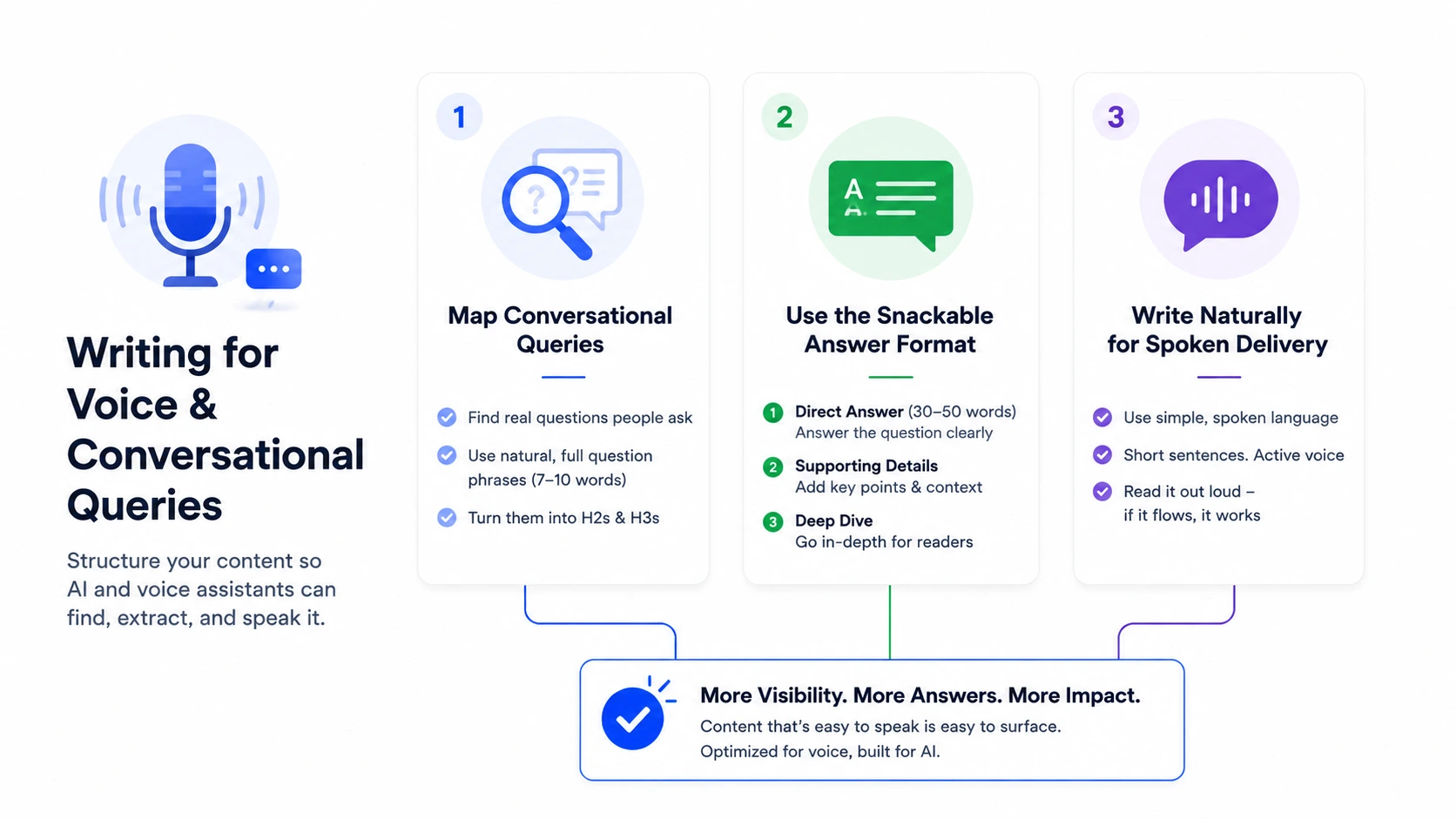
Conversational intent mapping replaces keyword research for voice optimisation. Voice queries are full questions averaging 7 to 10 words, and effective optimisation requires mapping complete natural-language questions to each page’s core topic, then structuring answers in concise 40 to 50 word blocks that voice assistants can read aloud without modification, according to Digital Applied’s 2026 analysis.
The gap between a typed query like “email marketing ROI” and its voice equivalent “what is the average ROI for email marketing campaigns in 2026” represents the optimisation target that most sites miss entirely. Each page needs at least three to five voice query variants mapped to its primary topic. These voice queries become your H2 and H3 subheadings, written as complete questions using the exact natural language phrasing a person would speak to an assistant.
The source for these voice query variants is not keyword research tools. It is People Also Ask boxes, Google autocomplete suggestions for question-format queries, and the exact phrasing your target readers use when asking questions on community platforms. These are the queries people speak because they mirror how people ask questions verbally, not how they type search terms.
The Snackable Answer Format
To rank in voice search, content must be snackable. AI models look for clear, authoritative definitions they can summarise in 30 words or fewer for spoken delivery, according to Soap Media’s May 2026 analysis of voice assistant content preferences.
The snackable answer format has three layers. The direct answer comes first: a concise 30 to 50 word block that answers the question completely in natural spoken English. This is the passage that gets extracted for voice delivery. The supporting details come second: two to three bullet points or sentences that provide context for users who want more depth. The deep dive comes third: the full analytical content for readers who click through.
This three-layer structure serves voice users, text-based AI extractors, and traditional readers simultaneously from the same piece of content. The direct answer layer satisfies voice delivery requirements. The supporting details layer satisfies AI Overview extraction. The deep dive layer satisfies the traditional reader experience and the E-E-A-T signals that protect rankings across all search types.
Natural Language That Reads When Spoken
Voice content must avoid sentence structures that feel natural in written text but become confusing when spoken aloud. Parenthetical asides require visual punctuation to parse. Sentences with multiple clauses separated by semicolons require re-reading to understand. Passive voice creates ambiguity about who did what. Abbreviations and acronyms that readers recognise visually are opaque in spoken form.
Every answer section intended for voice extraction should pass what practitioners call the read-aloud test: read the passage out loud at normal speaking pace and evaluate whether it is immediately comprehensible without any visual aids. If the listener would need to rewind or see the text to understand it, the passage fails the voice delivery requirement and needs to be rewritten.
AI systems are trained using conversational language patterns, making natural writing more important than robotic keyword repetition, according to Nuform Social’s June 2026 analysis of AI voice search behaviour. Content that sounds like a knowledgeable person answering a question in conversation will consistently outperform content that sounds like it was written to satisfy a keyword checklist.
The Technical Layer: Schema and Site Settings That Enable Voice Visibility
Technical optimisation for voice search covers three areas: Speakable schema implementation, page speed and mobile performance, and platform-specific technical requirements for each major voice assistant.
Speakable Schema: The Voice-Specific Signal
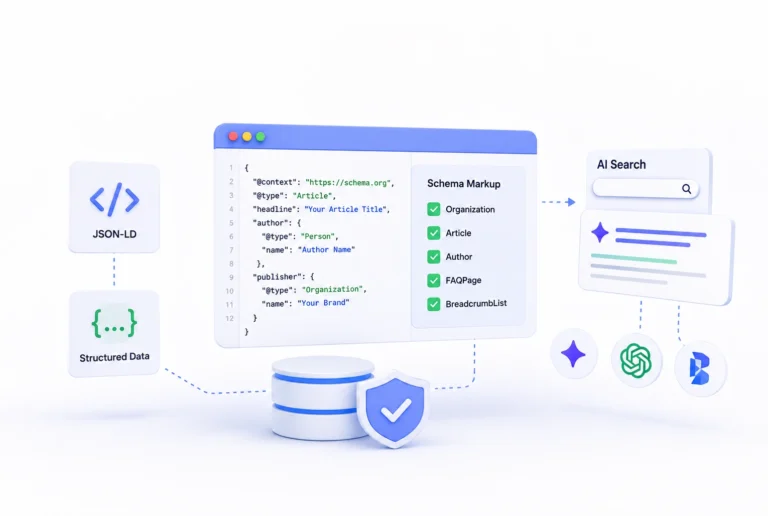
Speakable schema is a schema.org markup type that explicitly marks sections of a page as optimised for text-to-speech conversion. It tells Google Assistant and other voice platforms that a specific section of content has been structured for spoken delivery and should be prioritised for voice answer selection.
Speakable schema is implemented by adding a cssSelector or xpath property that points to the specific HTML element containing the speakable content. For a WordPress site, the simplest implementation marks the first paragraph of each major section as speakable because that is where the direct answer is placed using the answer-first writing approach.
A basic Speakable schema implementation in JSON-LD:
PASTE IN WORDPRESS CODE BLOCK:
{
“@context”: “https://schema.org”,
“@type”: “WebPage”,
“name”: “Your Page Title Here”,
“speakable”: {
“@type”: “SpeakableSpecification”,
“cssSelector”: [“.article-intro”, “.speakable-section”]
},
“url”: “https://themarketingshelf.com/your-page-url”
}
Add the CSS class speakable-section to the first paragraph of each major section in your WordPress posts using the Advanced block settings in the Gutenberg editor. This tells Speakable schema exactly where your voice-optimised passages are located on each page.
Page Speed: The Voice Citation Dealbreaker
If your server-side response lags, AI assistants will pull from a faster competitor, according to Soap Media’s May 2026 analysis of voice search ranking factors. Page speed is not a secondary signal for voice visibility. It is a threshold requirement. A page that loads in more than three seconds is structurally disadvantaged for voice citation regardless of content quality because the voice assistant’s timeout threshold means slow-loading pages may be skipped before the content is fully retrieved.
Core Web Vitals improvements that benefit traditional Google SEO apply directly to voice optimisation. Largest Contentful Paint under 2.5 seconds, Interaction to Next Paint under 200 milliseconds, and Cumulative Layout Shift under 0.1 are the three benchmarks that determine whether your pages meet the speed threshold for voice citation eligibility.
Bing Webmaster Tools and Index Now: Essential for Siri and Alexa
Because both Siri and Alexa+ use Bing’s index for web query retrieval, Bing Webmaster Tools verification is mandatory for voice visibility on these platforms. A site that is indexed by Google but not by Bing is invisible to Siri voice queries and Alexa+ web queries regardless of its Google rankings.
Verify your site in Bing Webmaster Tools at webmaster.bing.com. Submit your XML sitemap. Implement IndexNow, an open protocol supported by Bing that allows instant URL submission when new content is published. IndexNow reduces the time between publishing and Bing indexing from days to hours, which directly improves the speed at which new content becomes eligible for Siri and Alexa+ voice citation.
Mobile Optimisation: The Voice Query Environment
Voice queries are initiated predominantly on mobile devices and smart speakers. A site that is not fully mobile-optimised is structurally disadvantaged for voice citation because Google’s mobile-first indexing means the mobile version of your page is what the voice retrieval pipeline evaluates. Unresponsive layouts, text that requires zooming to read, and touch targets that are too small to tap reliably are all mobile signals that reduce voice citation eligibility.
Conversational Search: The Broader Context Beyond Voice
Conversational search in 2026 is broader than voice input alone. It describes the shift toward multi-turn, context-aware search interactions that can be initiated by voice, text, or visual input and that expect responses structured for natural dialogue rather than for a ranked list of links.
Multi-Turn Conversations and Follow-Up Intent
Conversational search users expect AI systems to maintain context across multiple turns in a conversation. A user who asks “what is topical authority” and follows up with “how long does it take to build” expects the AI to understand that “it” refers to topical authority without restating the subject. Content that covers a topic comprehensively, including its follow-up questions and common objections, is better positioned for multi-turn conversational retrieval than content that answers only the primary question.
Rather than optimising pages to rank for individual keywords, optimise them to be answer-ready for the full conversation a user might have around a topic. If a paragraph can stand alone as a clear explanation, it is more likely to surface within AI Overviews or conversational responses, according to AWeb Digital’s January 2026 analysis of conversational search optimisation patterns.
Voice Commerce and Transaction Queries
Voice commerce is projected to reach 164 billion dollars by 2028, growing at 24% annually, according to ZELITHO’s December 2025 analysis of the global voice commerce market. Transaction queries initiated by voice, including product reorders, subscription management, and local service bookings, are growing faster than informational voice queries.
For content sites, voice commerce is relevant specifically for affiliate and product review content. A user who asks an AI assistant “is Merlin AI worth it” or “what is the best AI tool for content marketing” is potentially initiating a purchase consideration query via voice. Content that answers these commercial voice queries with specific, direct evaluations and clear recommendations is positioned for both voice citation and affiliate conversion from the same optimization effort.
Semantic Search and Entity Relationships
AI systems are trained using conversational language patterns and understand language the way humans do, according to Nuform Social’s June 2026 analysis. This means voice and conversational search success is not about matching keywords. It is about covering the semantic relationships between the entities in your niche so completely that AI systems evaluate your content as the most comprehensive and accurate source available on that topic.
A post about voice search optimisation that naturally and accurately references Google Assistant, Siri, Apple Intelligence, Alexa+, Speakable schema, Position Zero, FAQPage schema, Bing Webmaster Tools, IndexNow, conversational intent mapping, and the snackable answer format provides entity completeness that signals comprehensive subject expertise to AI retrieval systems. Covering only some of these entities signals partial coverage, which reduces the extraction score for the entire piece.
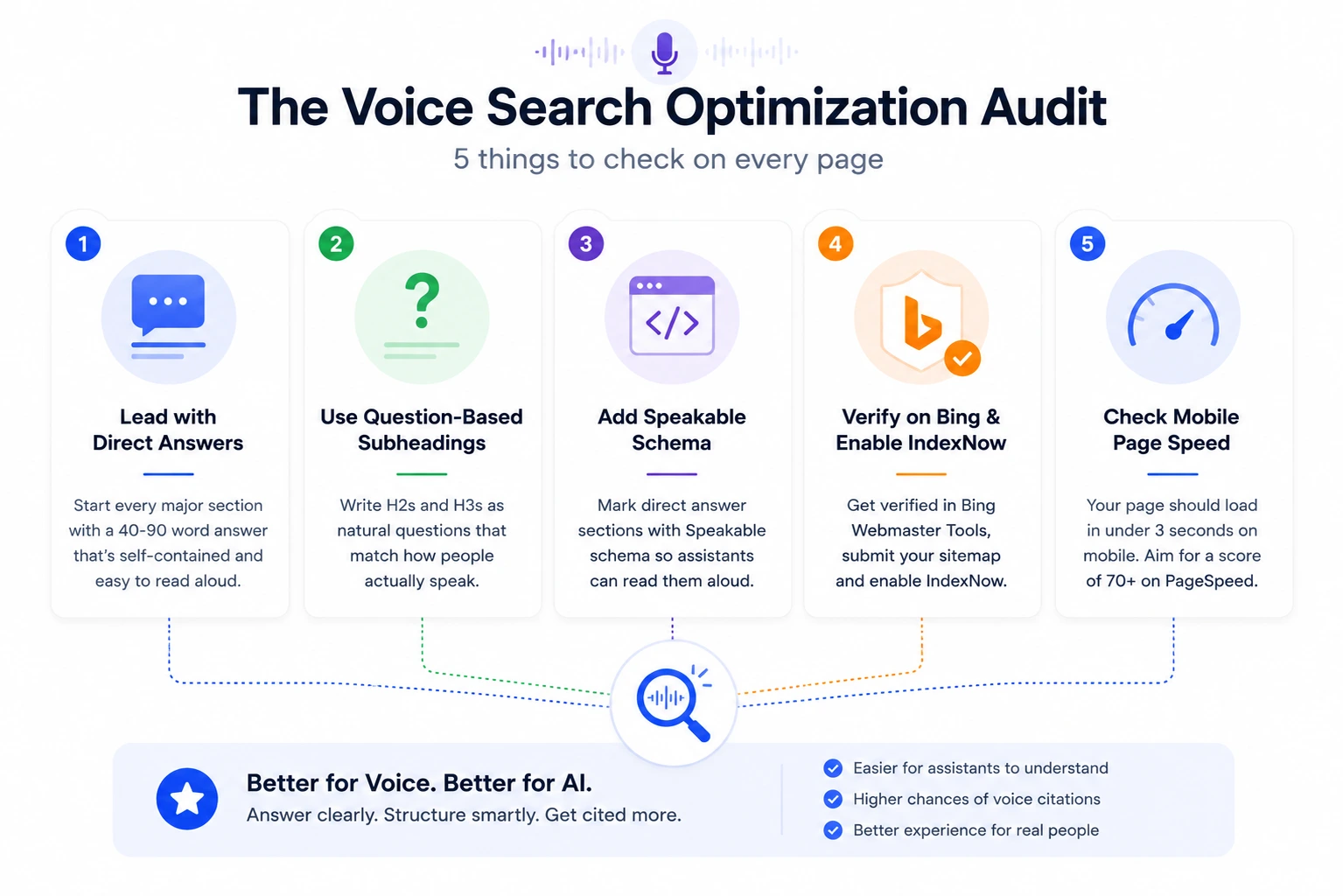
The Voice Search Optimization Audit: What to Check on Every Page
Apply this audit to your highest-traffic pages before creating new content. The five-point voice search audit takes under 30 minutes per page and directly addresses the most common voice citation failures. The Five-Point Voice Search Audit
Check one: Does every major section of the page lead with a direct answer of 40 to 90 words that is self-contained and reads naturally when spoken aloud? If not, rewrite the first paragraph of each section to lead with a direct, conversational answer before elaborating.
Check two: Are H2 and H3 subheadings written as complete questions using natural spoken phrasing? If subheadings are written as topic labels rather than questions, rewrite them to mirror the exact voice query phrasing your target reader would use.
Check three: Has Speakable schema been implemented marking the direct answer sections of the page? If not, add the speakable CSS class to the first paragraph of each major section and implement the Speakable JSON-LD block.
Check four: Is the site verified in Bing Webmaster Tools with an XML sitemap submitted and IndexNow implemented? If not, set this up immediately. Every day without Bing verification is a day of zero voice visibility on Siri and Alexa+.
Check five: Does the page load in under three seconds on mobile devices? Test using Google PageSpeed Insights at pagespeed.web.dev. Any page scoring below 70 on mobile has a speed issue that is suppressing voice citation eligibility regardless of content quality.
CONCLUSION:
27% of all global searches are now voice-initiated, 8.4 billion voice assistants are active worldwide, and the users under 35 who are your future audience conduct 60% of their searches by voice. This is not a niche optimization consideration. It is a mainstream search behavior that your content either serves or misses.
The good news is that the optimisation path for voice and conversational search runs through the same structural improvements that improve text-based AI citation, featured snippet ownership, and traditional Google rankings. Answer-first writing, question-format subheadings, direct self-contained answers of 40 to 90 words, FAQPage schema, and Speakable schema are not voice-only tactics. They are the universal signals that every AI retrieval system, typed or spoken, uses to evaluate and extract content.
The platform-specific additions are targeted and manageable. Verify in Bing Webmaster Tools and implement IndexNow for Siri and Alexa+ visibility. Add Speakable schema to mark your direct answer sections for Google Assistant and Gemini Live. Pass the read-aloud test on every answer paragraph before publishing.
Voice search is not a separate SEO workstream. It is what AI-optimised content looks and sounds like when it is working correctly. The content that earns voice citations, text-based AI citations, and traditional featured snippets is the same content built on the same principles. Get those principles right and every search surface, typed, spoken, and visual, works harder for your brand simultaneously.
FAQs
Q: What percentage of searches are voice searches in 2026?
A: Voice search reached 27% of all global queries in 2026, according to Digital Applied’s March 2026 analysis of global search volume data. This figure has grown steadily from a projection of under 20% in 2024, driven by AI assistant adoption across smartphones, smart speakers, in-car systems, and wearables. 60% of users under the age of 35 now conduct searches primarily via voice, according to Soap Media’s May 2026 analysis, making voice optimisation particularly important for brands targeting younger audiences.
Q: How many voice assistants are active worldwide in 2026?
A: 8.4 billion voice assistants are active worldwide in 2026, surpassing the global human population for the first time, according to ZELITHO’s December 2025 analysis of the global voice assistant market. This installed base includes every smartphone running Google Assistant or Apple Siri, every Amazon Echo and Google Nest smart speaker, every vehicle infotainment system, and AI-native assistants embedded in wearables and appliances. Voice is no longer an alternative search channel but the primary interface for a growing share of everyday search queries.
Q: What is the optimal answer length for voice search?
A: The optimal answer length for voice search delivery is 40 to 90 words, according to Fuel Online’s April 2026 analysis of voice assistant response patterns. Answers shorter than 40 words feel incomplete to the listener. Answers longer than 90 words lose the listener’s attention before the key information is delivered. The content should be structured in three layers: a direct answer of 30 to 50 words for voice extraction, supporting details of two to three bullet points for AI Overview inclusion, and full deep-dive content for traditional readers.
Q: What schema markup types are most important for voice search optimisation?
A: The two most important schema types for voice search optimisation in 2026 are Speakable schema and FAQPage schema. Speakable schema explicitly marks sections of a page as optimised for text-to-speech conversion, telling Google Assistant and Gemini Live exactly where to look for a spoken answer. FAQPage schema enables Q&A extraction for Perplexity, ChatGPT, and Bing Copilot voice interfaces. Organization schema with sameAs properties and Article schema with Author credentials support E-E-A-T signals that all voice platforms use as authority indicators for source selection.
Q: How do you optimise for Siri and Alexa voice search specifically?
A: To optimise for Siri and Alexa+ specifically, verify your site in Bing Webmaster Tools at webmaster.bing.com and submit your XML sitemap, because both Siri and Alexa+ use Bing’s index for web query retrieval. Implement IndexNow to enable instant URL submission when new content is published, reducing the time between publishing and Bing indexing from days to hours. Add Speakable schema marking your direct answer sections, implement FAQPage schema, and ensure the site loads in under three seconds on mobile devices. For Siri specifically, establish an Apple Maps presence for local queries and use natural spoken-English phrasing throughout your content.